Herculaneum
The visits to Herculaneum and Pompeii were one of the main highlights of the holiday for us. Walking through these preserved cities was a unique experience with a very knowledgeable guide bringing everything to life.
Amalfi Coast 2025 Photos:
First a few facts you may or may not already know. The eruption of Mount Vesuvius in AD 79 was one of the largest ever known in human history. Standing in the ruins of Herculaneum which is about 11 miles away from the volcano I found it difficult to take in the scale of what happened. When it erupted it sent a cloud of stones, ash, etc over 20 miles high and spewed out molten rocks at the rate of 1.5 million tons a second. The eruptions lasted on & off for 2 days. Herculaneum was engulfed by a tide of molten mud speeding down at over 100 mph burying it under about 60 feet of volcanic matter. It was only “rediscovered” in 1709 after someone was digging in the area (shades of the discovery of the Terracotta Army in Xian in 1971). The extreme heat of the molten rocks carbonised anything organic – such as wood, food, people, etc. It is eerie to walk round the rooms learning about the daily life that was so suddenly cut short. Herculaneum was a coastal town, now it is about a quarter of a mile inland. Only a small part of the city has been uncovered. As you can see in the photos the area has housing all round it. As our guide said – who is going to pay to relocate all the residents so that the archaeologists can excavate further in an already overcrowded Naples?
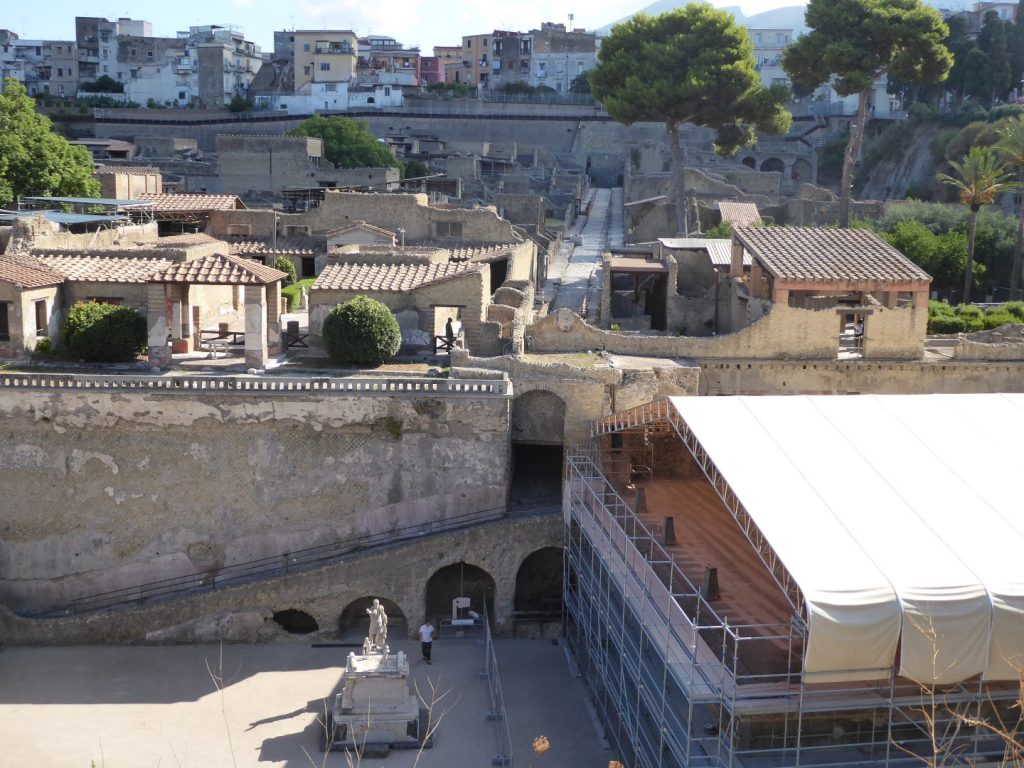
The initial view of Herculaneum. The awning on the right shows that major investigation is continuing.
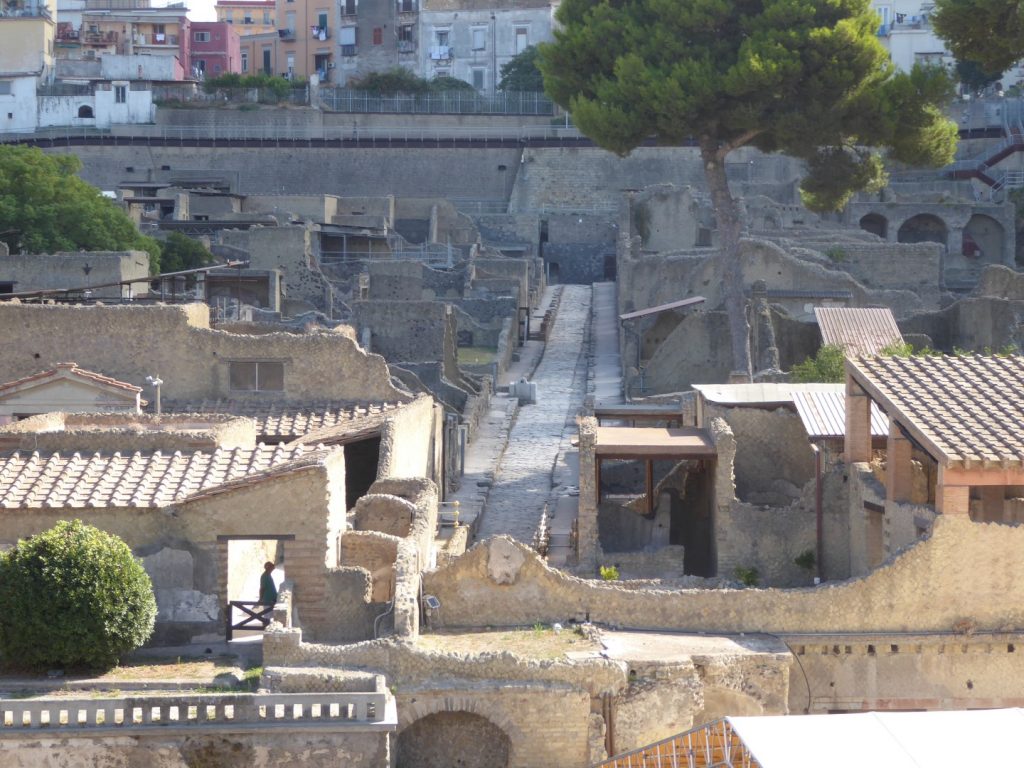
Note the level of the modern housing in the distance.
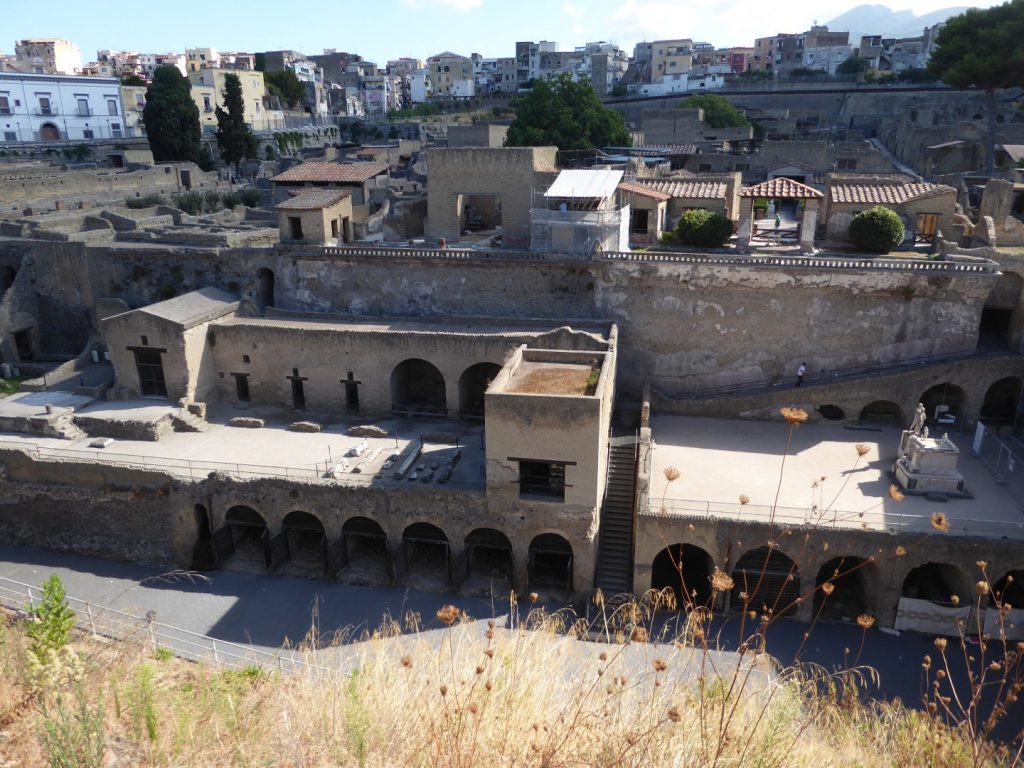
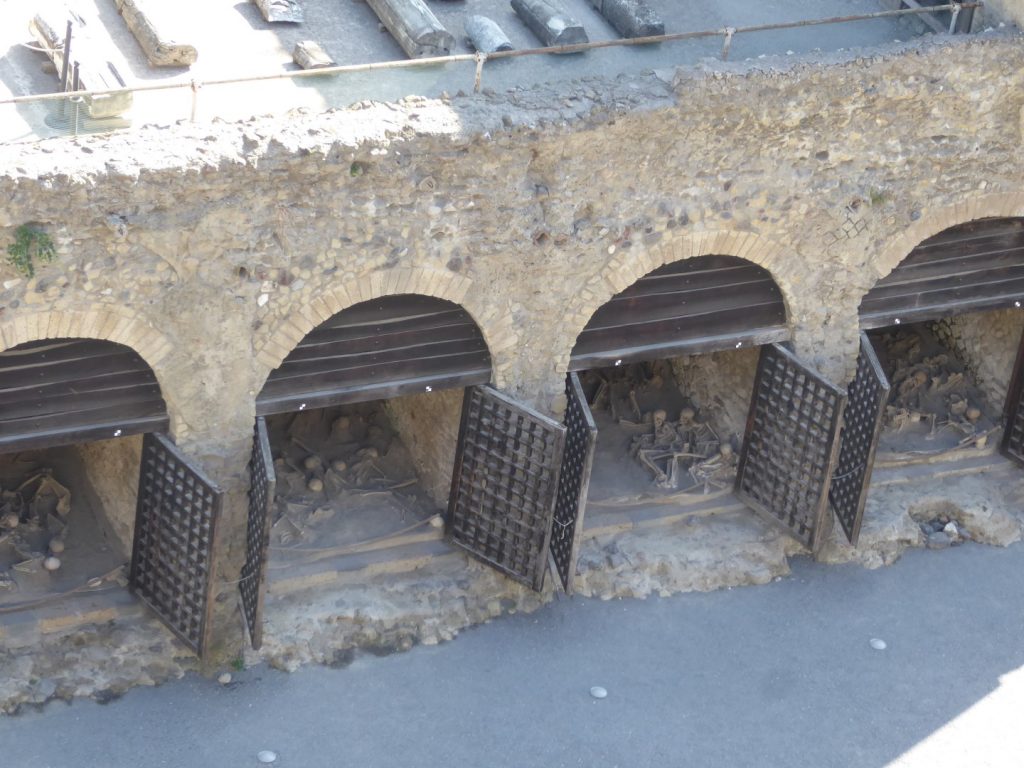
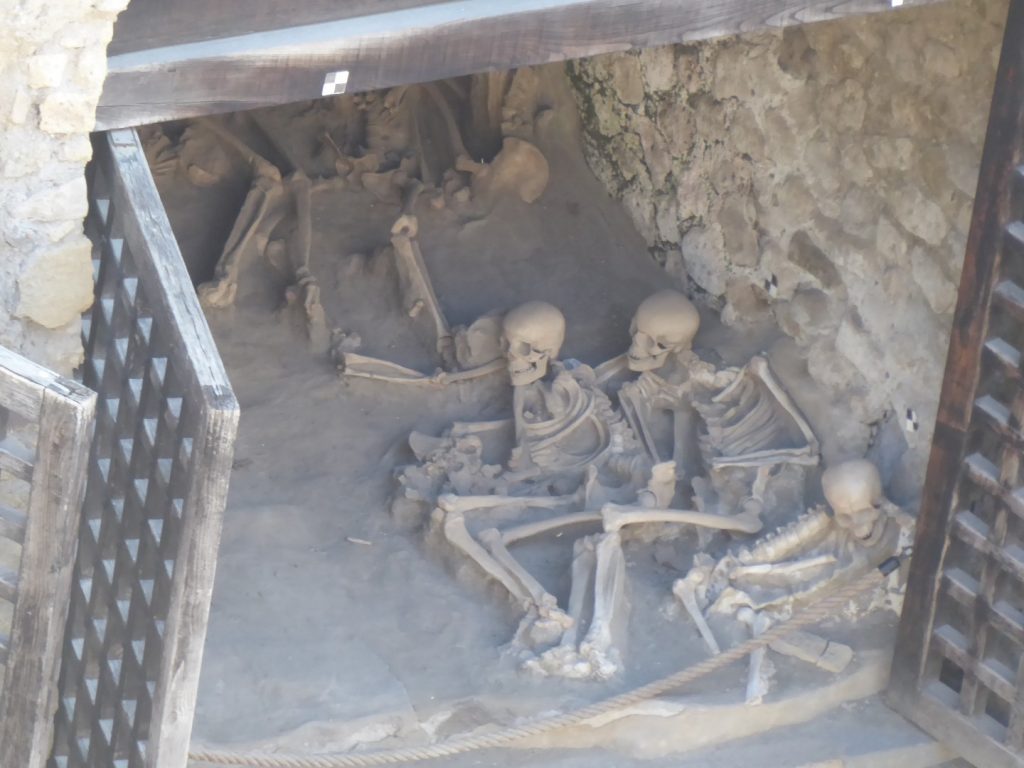
The arches in the lower part of the photo on the left housed the boats and were used unsuccessfully for shelter during the eruption.
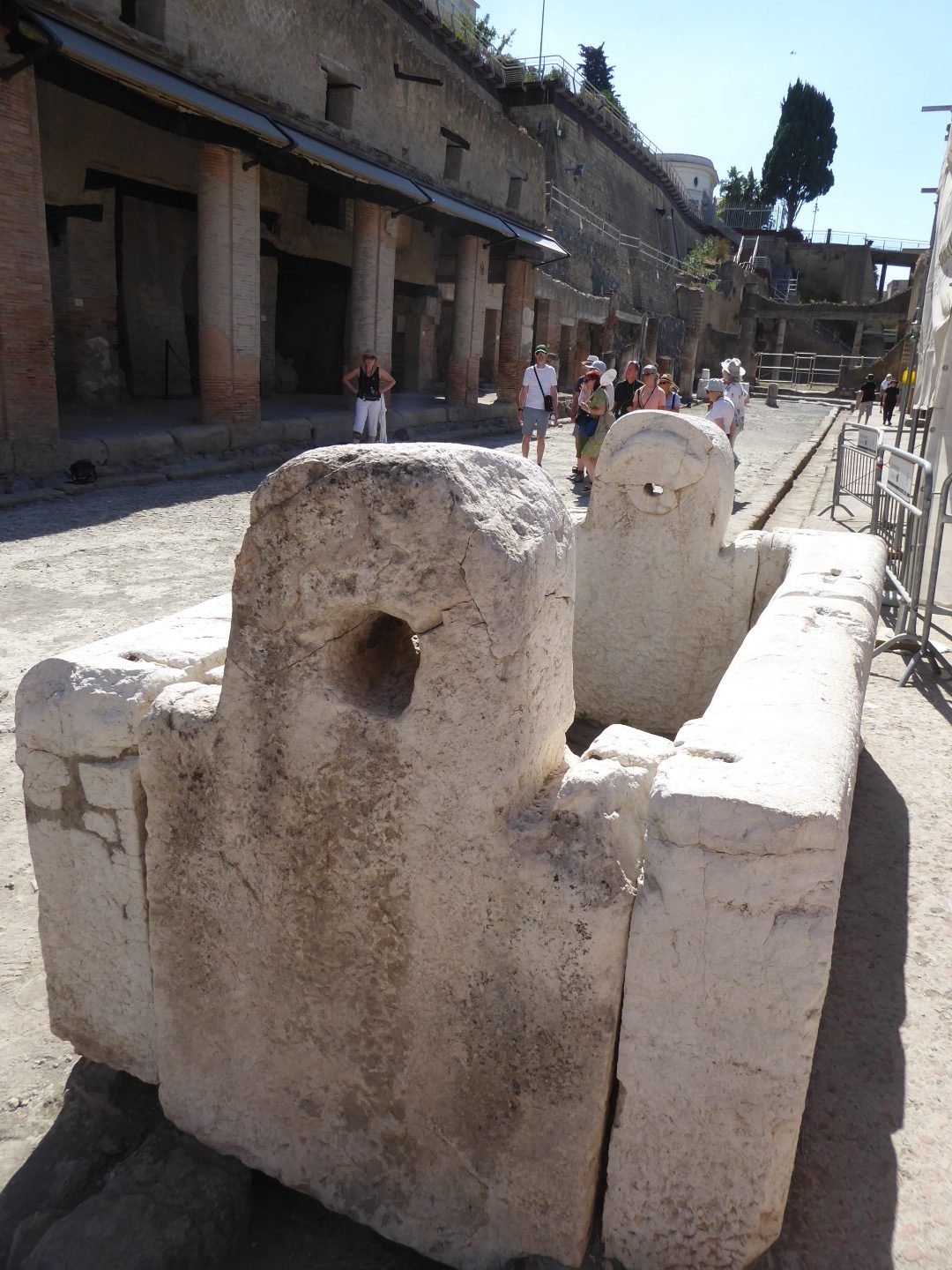
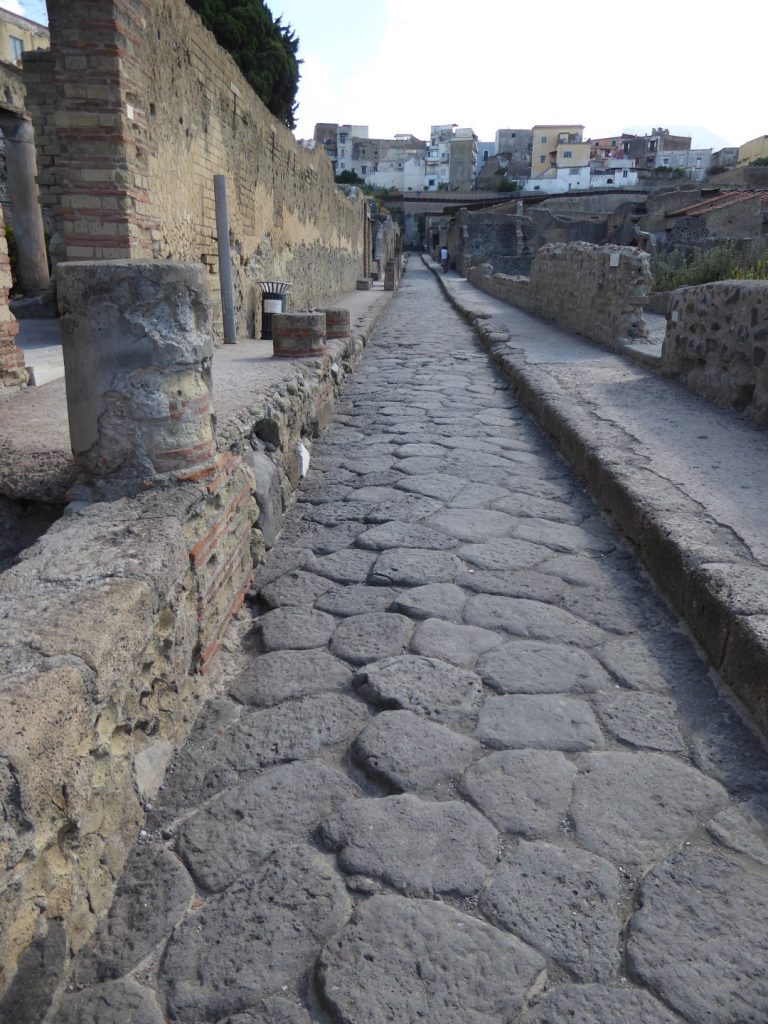
One of the main thoroughfares, Cardo III Inferiore. (Cardo meaning North-South orientation)Note it is relatively narrow as no carts used these roads.
Off this road was Decumano Superiore (Decumano meaning East-West orientation – you’ve got to hand it to the Romans, they were very methodical!) in which was one of the first houses we visited – The House of the Wooden Partition. As so few of the owners were known, the buildings and houses are given artificial names to identify them based on any characteristic found there. So the first house we spent time in had a wooden partition.
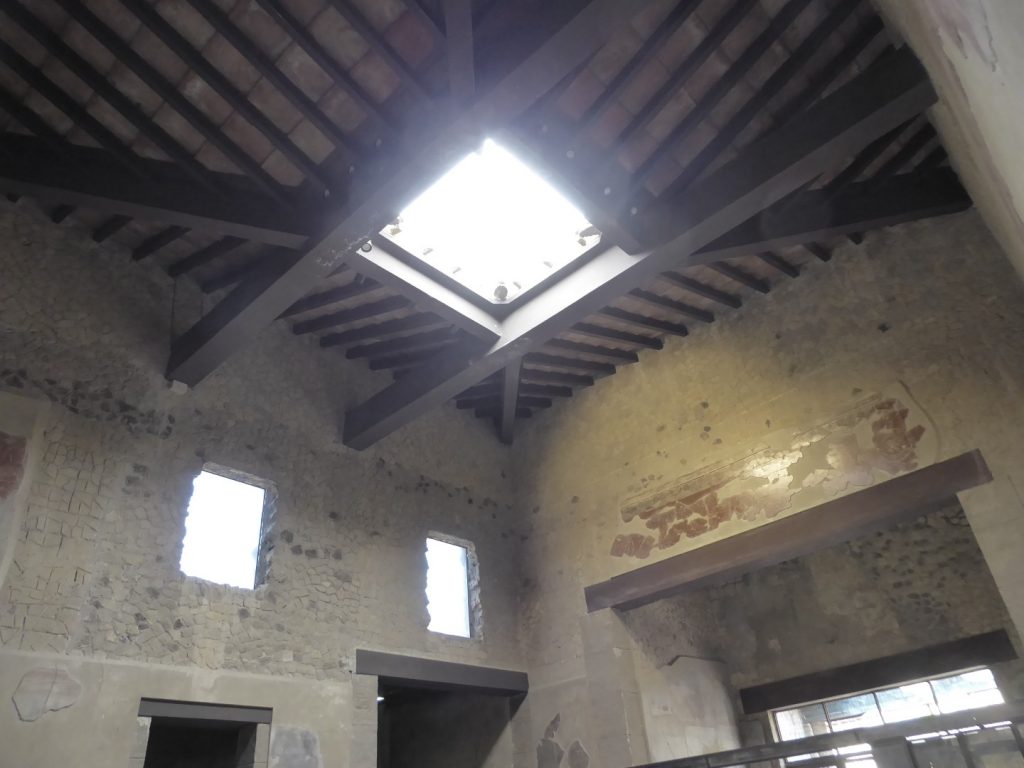
The House of the Wooden Partition

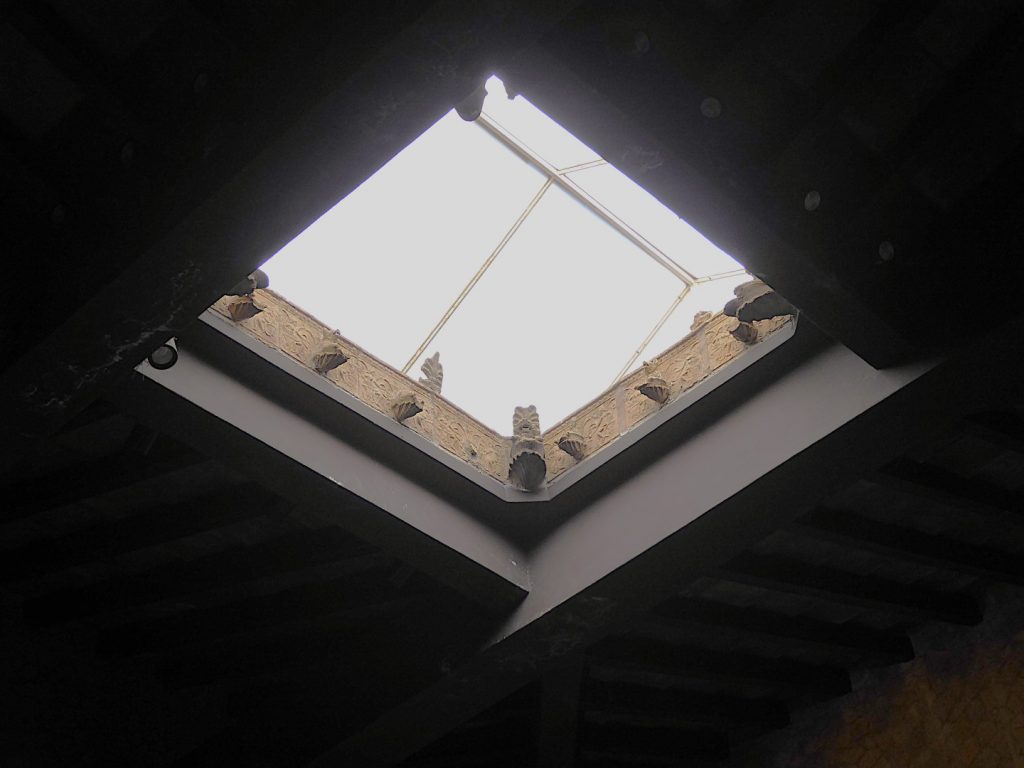
The wooden partition is on the right and separated the on-street shop from the domestic part of the house. A fountain would have playing in the centre of the room & was gravity fed. The grill on the floor next to it was under the hole in the roof to collect rainwater.
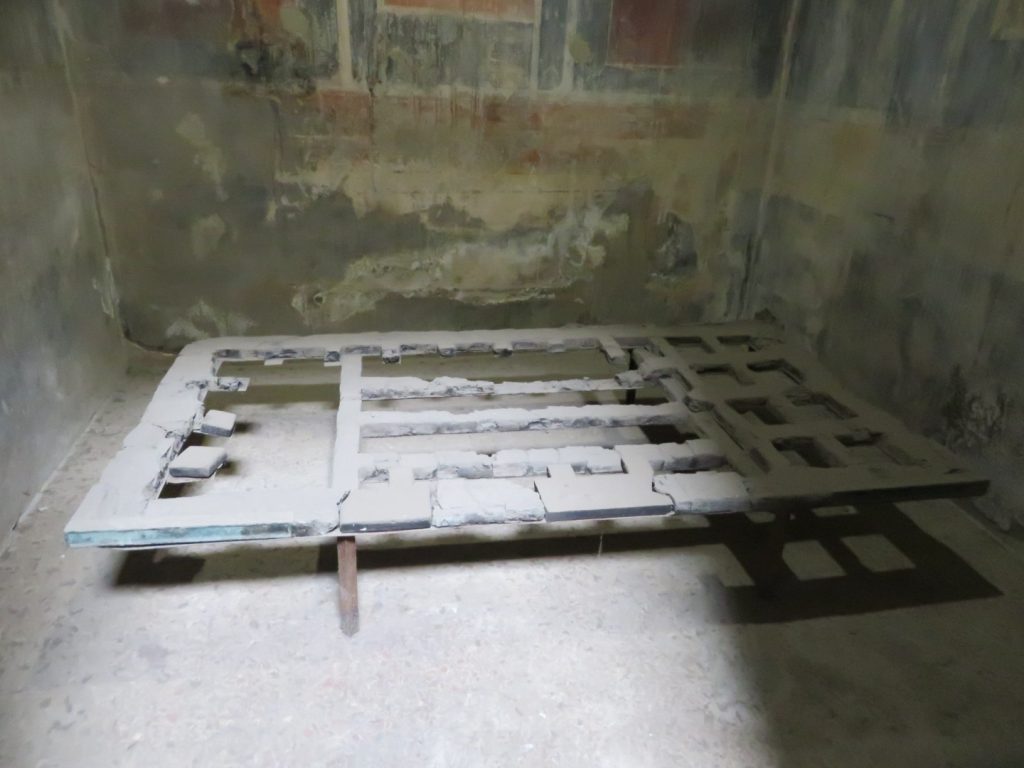
A folding bed in a side room. Maybe the owner could have a nap when tired?
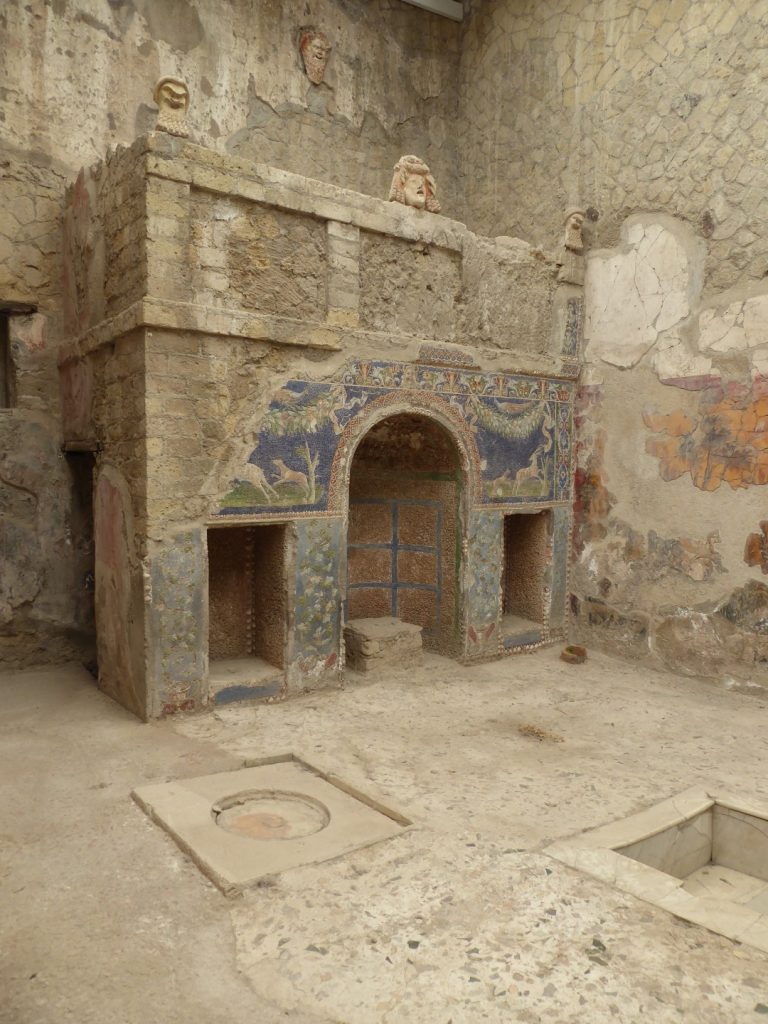
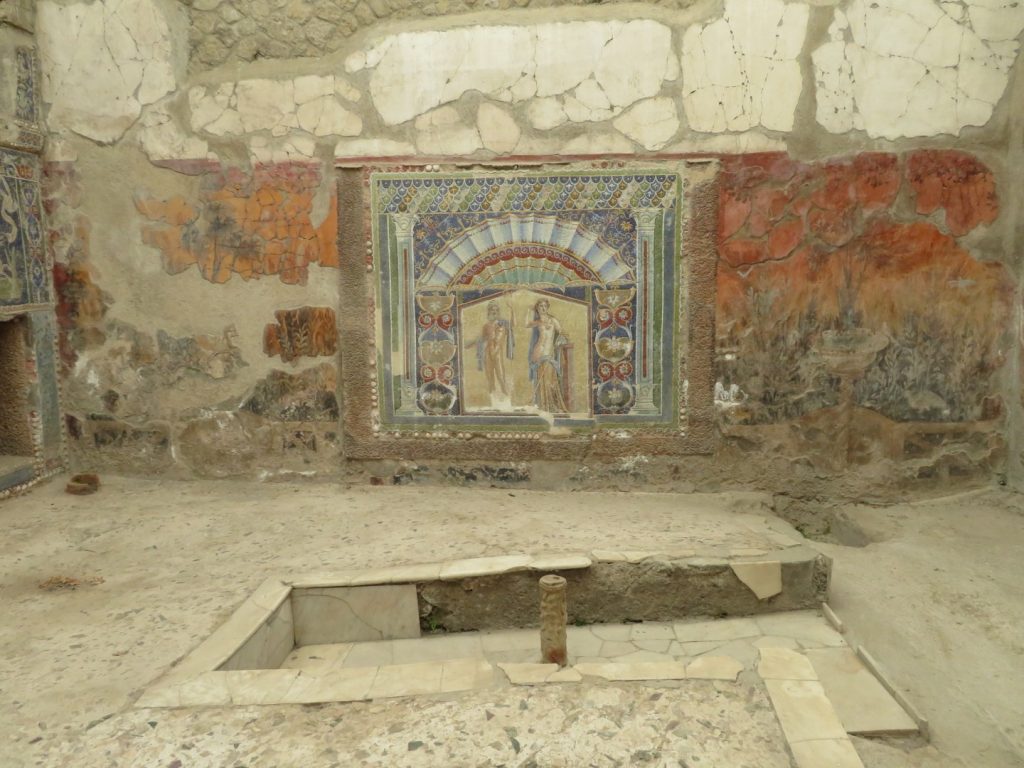
House of Neptune and Amphitrite
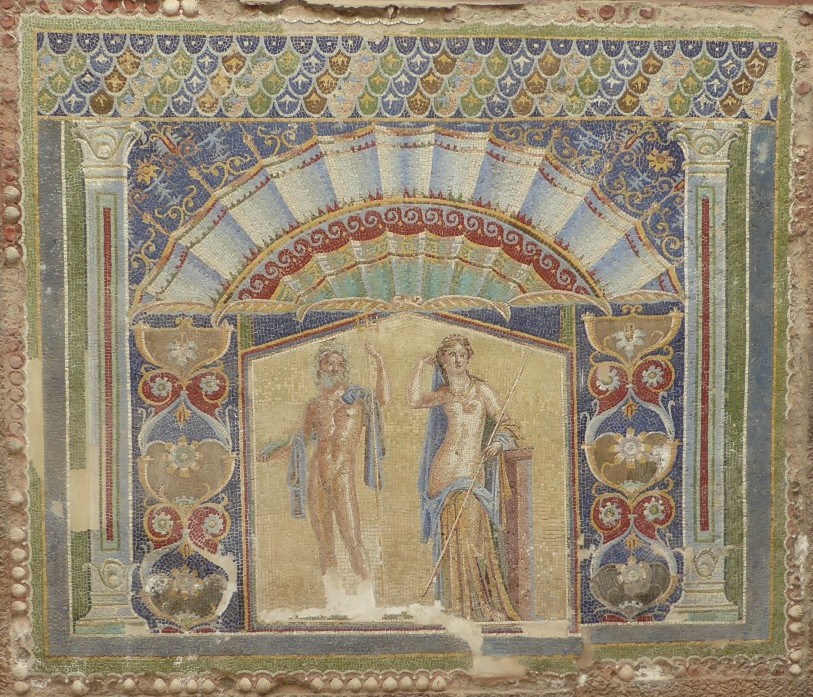
This house has a particularly fine dining room with a mosaic on the wall of Neptune & his consort Amphitrite and opposite the dining area is an ornate nymphaeum. This is dining in style.
Bathhouses
Bathhouses were very social areas in Roman times. Obviously separate ones for Men & women. The Roman bathing experience was a multi-step process that included: Sudatorium, a dry, hot chamber for sweating, Calidarium: A hot room with moist heat, where bathers would often have attendants use a strigil (a scraping tool) to cleanse their skin, Tepidarium, a warm room for cooling down before entering the cold water and a Frigidarium, the cold room where bathers would plunge into cold baths (not found in the women’s bathhouses).

The changing room with shelving for the bathers’ clothes
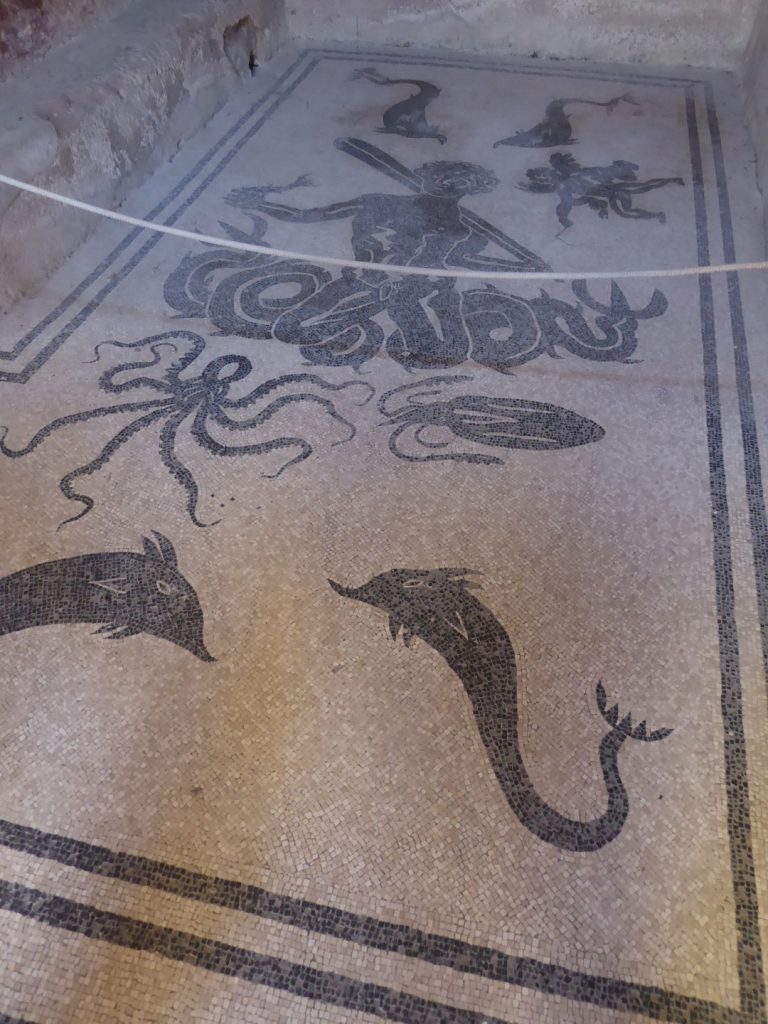
Floor mosaic showing Poseidon & sea creatures – appropriate for a bathhouse
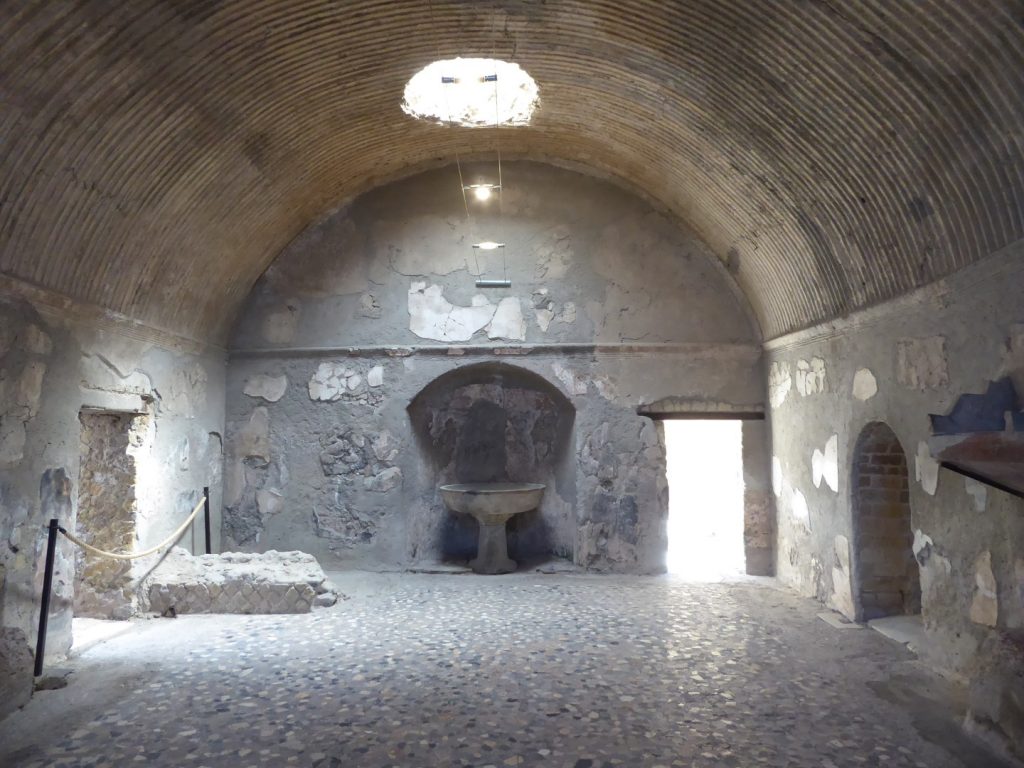
The Tepidarium with a basin in the niche to cool down.
The College of Augustales
This was a religious building used for political purposes. Those partaking of the generosity of the sponsor were expected to vote for him in elections. Graffiti on one of the walls states “I invite you to vote in the Augustan curia”. An accepted form of vote-buying at the time. Of course politicians are much more subtle about such shenanigans nowadays!
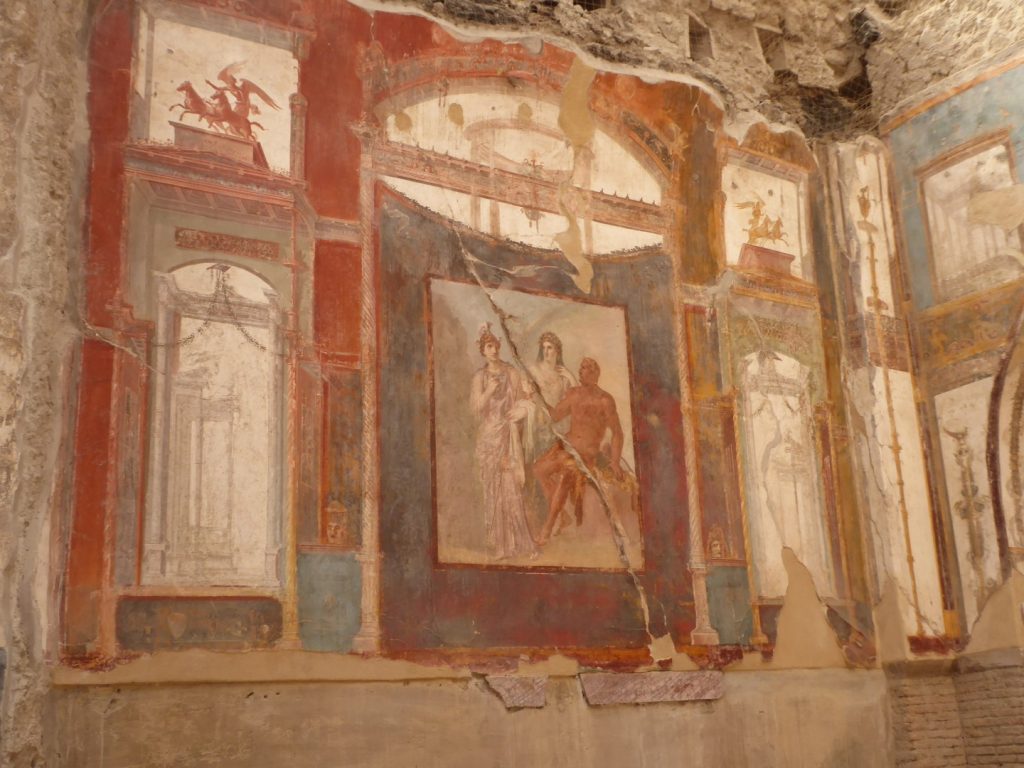
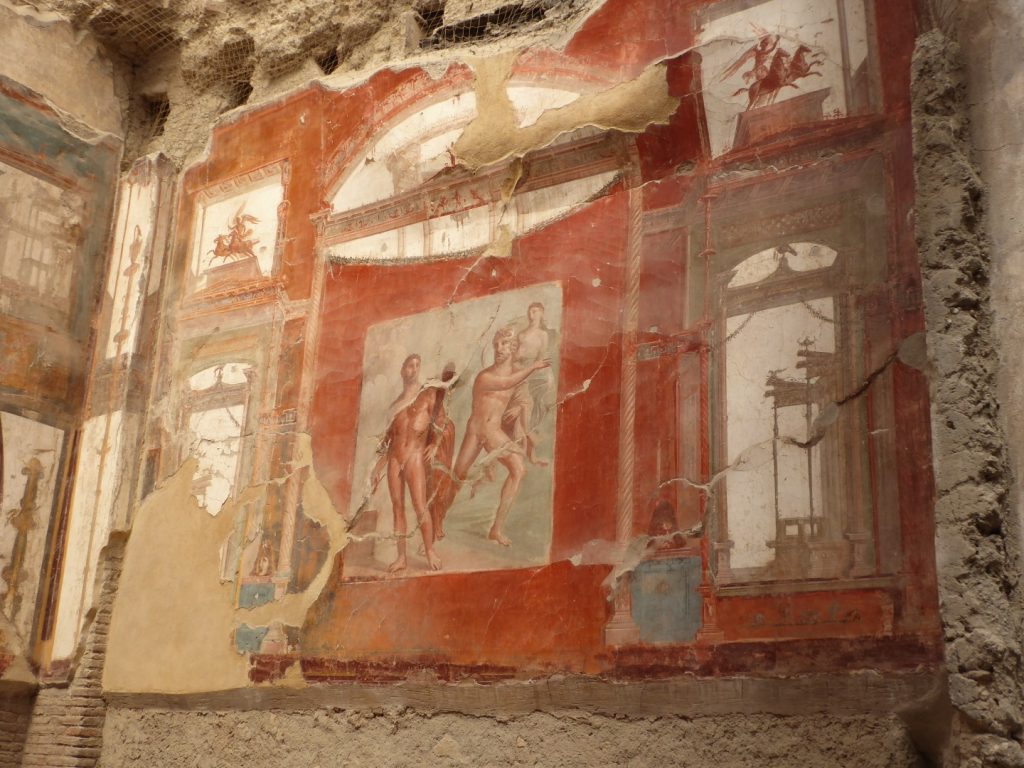
Below is the room used as a host / guest cell by the custodian. I was amazed that so many large sections of fresco work were still on the walls in this and other buildings in Herculaneum & Pompeii. The walls may have cracked but the decoration is often still in place. The dyes and colours were all of natural pigment & yet they have lasted well after nearly 2,000 years.
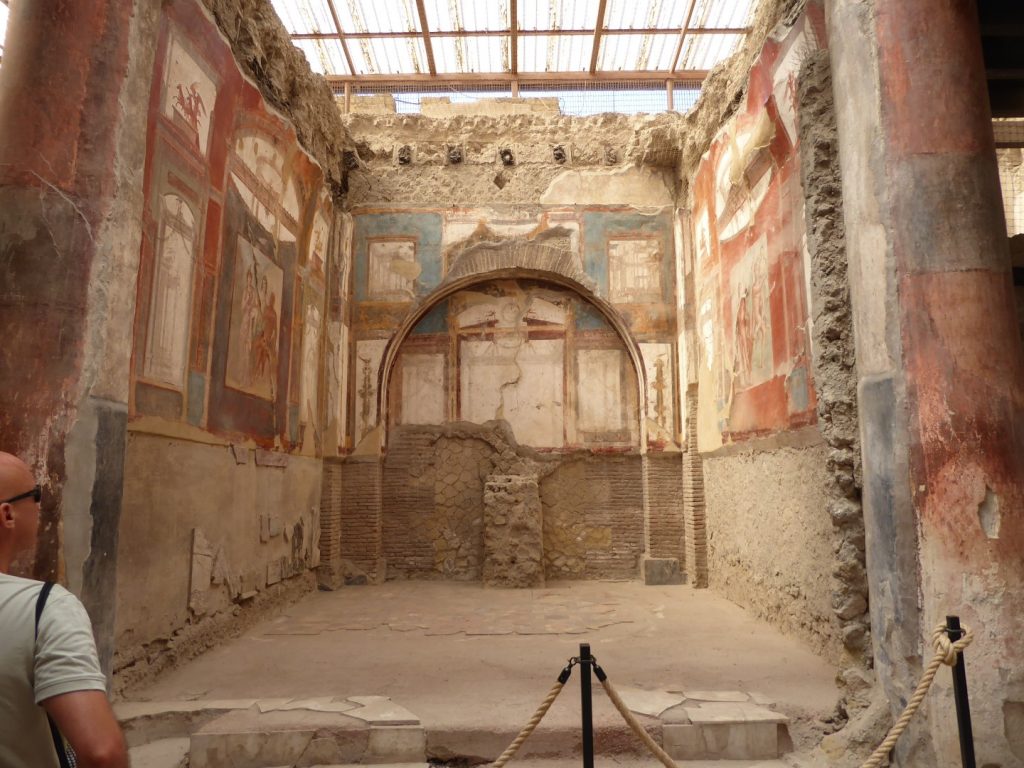
The Left & right walls of the guest room show scenes of Hercules. The one on the left (below) shows the apotheosis of Hercules with Juno & Minerva. The one on the right shows Hercules scowling at Achelous for abducting Deianeira – Hercules’ future wife. I notice that the image of Hercules in these as well as other works in the National Archaeological Museum in Naples show him as being of darker skin tone than others in the images. I wonder why?
Other photos from Herculaneum